Traffic is the single most cited community concern when a new industrial development is proposed. Residents worry about congestion at intersections, truck volumes on local roads, safety near schools and parks, and the cumulative impact of thousands of additional daily vehicle movements. It is also the area where the gap between data centers and logistics facilities is most dramatic and most thoroughly documented. The numbers are not close — and they come from independent engineering studies, not developer projections.
How Traffic Studies Work
Traffic impact studies are conducted by licensed traffic engineers using established methodology from the Institute of Transportation Engineers (ITE) Trip Generation Manual. The manual provides statistically derived trip generation rates for different land use categories based on observed data from facilities across the country. Developers are typically required to submit traffic impact studies as part of the permitting process for large developments, and those studies are reviewed by local transportation authorities.
The ITE methodology allows direct, apples-to-apples comparison between land uses that might compete for the same site. When a parcel is being evaluated for either warehouse development or data center development, engineers can calculate the expected peak-hour and daily trip generation for each option and present the difference to decision-makers.
The Indianapolis Case: An 80 Percent Reduction
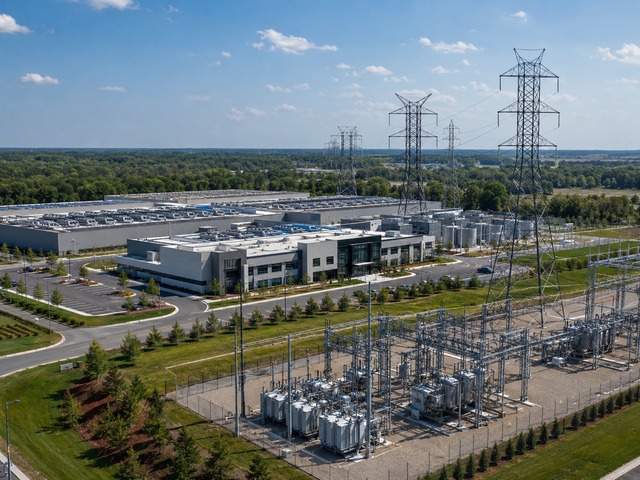
One of the most detailed recent examples of this comparison comes from a 2025 traffic engineering memorandum prepared by American Structurepoint for the Sabey Data Centers development in Indianapolis, Indiana. The site had previously been approved for a mixed industrial development comprising general light industrial buildings and high-cube warehouse facilities. The developer later proposed to replace that approved plan with two data center buildings and an electrical substation.
The engineers compared the trip generation of the previously approved industrial plan against the proposed data center plan using the ITE Trip Generation Manual, 12th Edition. The results were unambiguous.
The previously approved industrial and warehouse development was projected to generate 558 total vehicle trips during the AM peak hour and 554 trips during the PM peak hour. The proposed data centers were projected to generate 111 AM peak hour trips and 106 PM peak hour trips — reductions of 80 percent in the morning and 81 percent in the afternoon. In raw numbers, the data center alternative produces 447 fewer AM peak trips and 448 fewer PM peak trips per day compared to the warehouse alternative on the same land.
The engineers concluded that the roadway improvements designed for the more intensive industrial use would remain fully adequate for the data center — meaning the road infrastructure built to handle the warehouse scenario more than covers the data center scenario with capacity to spare.
Understanding the Operational Difference
The traffic difference is not a quirk of one study or one site. It reflects a fundamental difference in how data centers and logistics facilities operate.
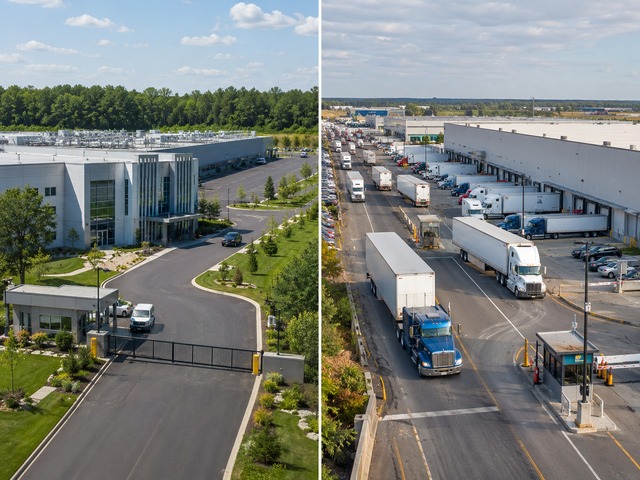
Logistics facilities exist to move goods. Their operational model requires constant vehicle movement: inbound trailers bringing product, outbound trailers dispatching orders, and the shift-change vehicle concentrations of a large hourly workforce. A million-square-foot fulfillment center may process hundreds of trailer movements daily. The parking facilities required for shift workers can occupy more land area than the building itself. The traffic signature of a logistics operation is large, constant, and concentrated at predictable times.
Data centers exist to process and store information. Once operational, they require minimal physical inputs. Microsoft’s community fact sheet describes the staffing reality directly: approximately 50 employees per building across a 24-hour period, spread across multiple shifts. There are no loading docks cycling through truck traffic. Deliveries are occasional — machinery replacements, parts, office supplies — not constant. The parking requirement is modest. The vehicle movements generated are a fraction of what a comparably sized industrial facility produces.
The ITE Trip Generation Manual reflects this reality. The manual’s data center land use category (ITE Code 160) produces far lower trip generation rates per thousand square feet than general industrial (Code 110) or high-cube warehouse (Code 154) categories. The Sabey study confirmed that even using developer-provided employee counts and delivery estimates — which produced higher trip projections than the ITE formula alone — the data center alternative was dramatically less traffic-intensive than the warehouse alternative it replaced.
What This Means for Road Infrastructure
The traffic implications extend beyond raw vehicle counts to the type of traffic generated. Logistics facilities generate heavy truck traffic — the vehicles that cause the most wear on roadway surfaces, require the widest turning radii, and create the most significant safety concerns for pedestrians and cyclists. A distribution center pulling hundreds of semi-trailer movements per day imposes road maintenance costs that often exceed what local governments recover through property taxes.
Data centers generate primarily passenger vehicle traffic from employees and occasional light delivery vehicles. The rare heavy equipment deliveries associated with facility construction and occasional major maintenance are temporary events, not continuous operational loads. The road maintenance burden imposed by a data center is a fraction of that imposed by a logistics facility of comparable square footage.
For communities evaluating competing development proposals, this difference has direct fiscal implications. The transportation infrastructure investment required to serve a logistics facility — road widening, signal upgrades, intersection improvements — can run into tens of millions of dollars in public spending. The data center alternative frequently requires no new public road investment at all, particularly when replacing an already-approved industrial use.
The Neighborhood Experience
Beyond the engineering metrics, there is the lived neighborhood experience. Roads adjacent to major logistics facilities become truck corridors — loud, congested, and difficult to navigate safely during peak periods. Residents near distribution centers frequently cite truck traffic as the primary quality-of-life impact, often more significant than noise or visual concerns.
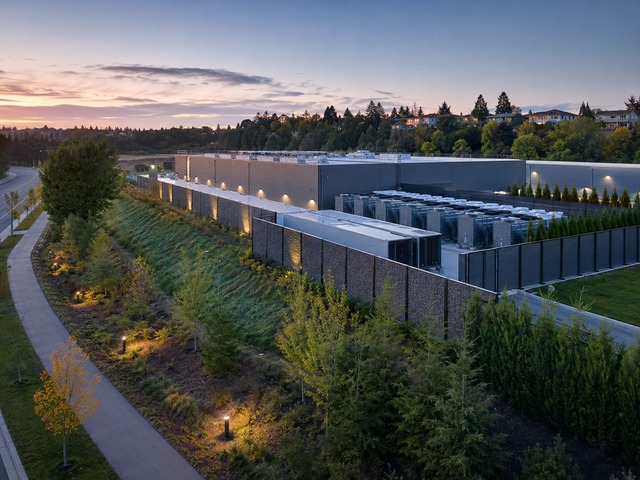
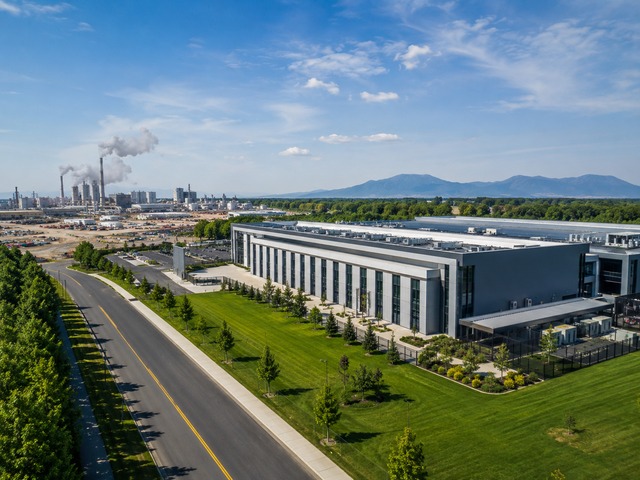
Neighborhoods adjacent to data centers have a fundamentally different experience. The roads are quiet. There is no shift-change surge of employee vehicles. There are no truck queues waiting for dock access. The facility is large and visible but operationally invisible. For residents near a site that transitions from planned logistics use to data center use, the difference in daily experience is significant.
Implications for Local Government and Planning
The traffic advantage of data centers over logistics facilities has direct implications for how local governments should evaluate competing development proposals. When a site zoned for industrial or commercial use attracts competing interest from a logistics operator and a data center operator, the traffic analysis alone provides a compelling basis for preferring the data center.
Planning commissions and elected officials reviewing these decisions should request independent traffic impact studies for both alternatives when that comparison is possible. The ITE methodology provides a standardized framework for that comparison. The Indianapolis study demonstrates that the difference is not marginal — it is an 80 percent reduction in peak-hour traffic impact.
For communities that have already approved industrial or logistics uses on a site, a developer’s proposal to replace that use with a data center should be evaluated as a significant improvement, not treated with the same level of concern as the original industrial approval. The data center is not just a different use — it is a substantially lighter use in terms of transportation impact.
Why This Matters
Traffic is where community opposition to industrial development is most viscerally felt — and it is where the data center most decisively outperforms the logistics alternative. An 80 percent reduction in peak-hour trips is not a marginal improvement. It is a different order of magnitude of impact. Communities that recognize this distinction can make better-informed land use decisions, reduce public infrastructure investment, protect neighborhood quality of life, and still capture the tax revenue and employment benefits that large-scale industrial development provides. The data center is not just a better neighbor — it is a dramatically quieter one.
about
avada factory
Sempery ultricies nibh at dolor cras urna eleifend nec. Atiam efficitur tempor.